For years in Zimbabwe, when buying into a property development, families could move onto a stand and start building right away. The roads, water pipes, and sewers were meant to come later. Too often, later never came. Whole suburbs grew up with no clean water and no working sewers.
In late June 2026, the government moved to end this. At a media briefing, the Minister of Local Government and Public Works, Daniel Garwe, was blunt about it.
“There is no such thing as parallel development, where people are being asked to build houses while servicing of roads, water and sewer is still taking place. We don't have such a thing.” — Daniel Garwe
What parallel development means
The name says it plainly. “Parallel” means two things happening at once. Parallel development let home building and land servicing run side by side. People could put up houses while the roads, water, and sewer were still being worked on — or before that work had even started.
The policy dates back to around the year 2000. It was meant to speed up housing delivery. Over the next two decades, it helped create sprawling settlements without basic services. In many suburbs, stands were occupied long before water pipes, sewer lines, and drainage were ever installed.
What the rule now says
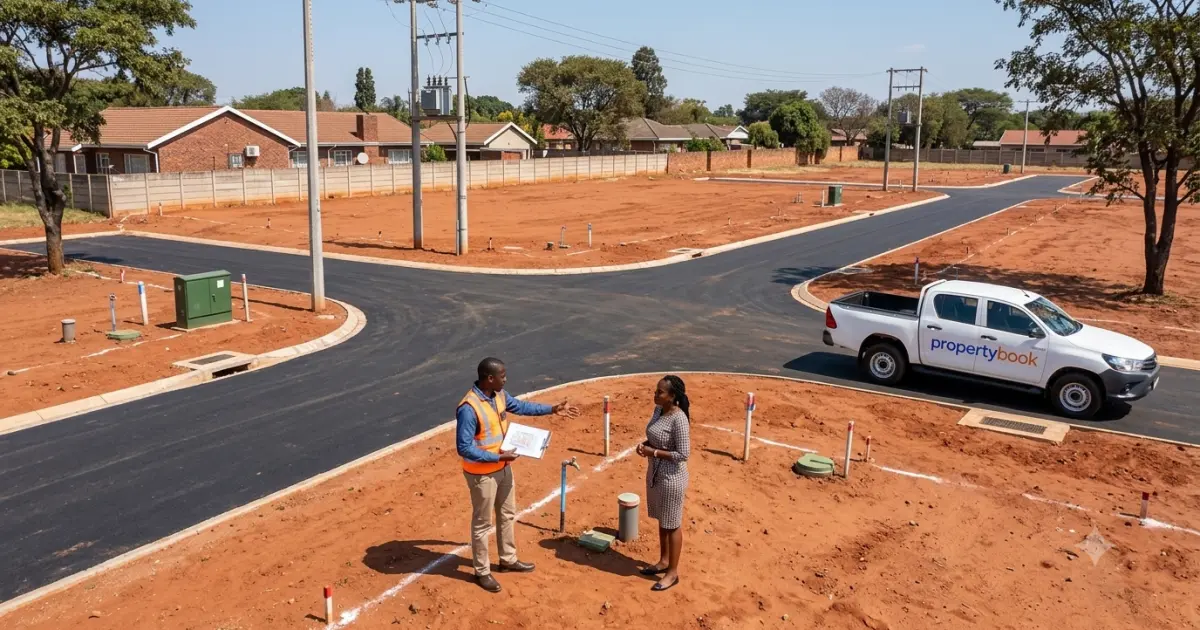
The order flips the sequence. Property developers have to service the entire development first. Houses come after.
“The roads, water and sewer must be constructed before anything else is built.” — Daniel Garwe
Garwe said this applies to everyone. He stated that local authorities, government agencies, and private companies must all complete the required infrastructure first. No group is left out.
The Certificate of Compliance
There is a clear checkpoint in the process. It is called a Certificate of Compliance.
Under Zimbabwe's Regional, Town and Country Planning Act, a local authority issues this certificate only after it confirms one thing: that all the infrastructure in the approved subdivision plan is finished and built to the proper standard. In short, the council must confirm that the roads, water, sewer, and drainage are actually there and working.
Reputable developers have Certfificates of Compliance before house construction begins.
Why the government acted
Garwe tied the change to a bigger problem. He said allowing houses to go up before infrastructure has led to poor planning, weak service delivery, and heavy repair bills for councils years later.
The wider picture matches his words. In parts of Harare's high-density suburbs, residents can go days without tap water. Some draw water from unsafe boreholes. Broken sewer pipes have turned some streams into open drains. Cholera has flared up more than once.
“We will no longer tolerate a situation where a resident in one town enjoys clean water, while a resident in a neighbouring district faces a cholera outbreak due to broken-down sewer systems.” — Daniel Garwe
The government has also acted on the ground. In Harare South, authorities have demolished illegal structures. Garwe said this followed court orders granted years earlier, and that the Executive cannot overrule the courts.
What the rule means on the ground
The line is now clear. No one may build on a stand, or move onto it, until the services are complete and certified. Roads, water, sewer, and stormwater drainage must be in place first.
According to the guidelines, local authorities and central government carry responsibility for the off-site infrastructure that connects these developments to the wider network.
Quick answers (FAQ)
What is parallel development?
It is the practice of letting people build houses on stands while — or before — the roads, water, and sewer were installed. The government has now stopped it.
What must happen before a house can be built now?
All the services must be in place first. Roads, water, sewer, and stormwater drainage must be fully installed and certified by the local authority before construction.
What is a Certificate of Compliance?
Under the Regional, Town and Country Planning Act, it is issued only after the council confirms that all the infrastructure in the approved subdivision plan is finished and built to standard.
Why did the government end parallel development?
Minister Garwe said building before services caused poor planning, weak service delivery, and costly repairs for councils years later. It also left many suburbs without water and working sewers.
Zimbabwe's parallel development rule puts infrastructure first: roads, water, and sewer must come before any house is built. For property news and serviced developments across Zimbabwe, visit Propertybook.