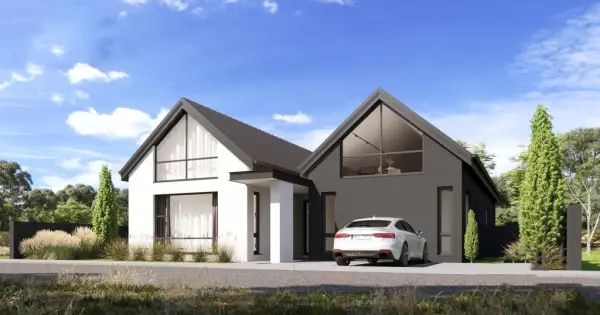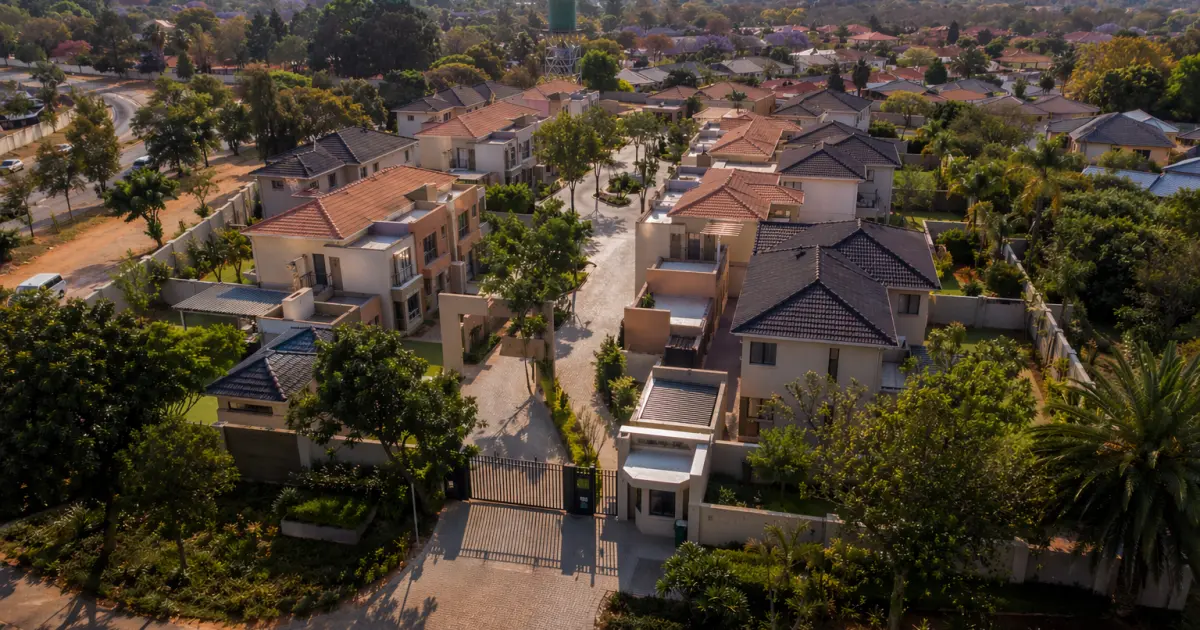
You've seen the ads. A neat row of homes behind a wall, a guard at the gate, a pool in the brochure. Cluster houses look like the answer to a lot of problems — security, affordability, low maintenance. But what's actually behind that gate? What infrastructure comes with these developments, and what do you have to sort out yourself?
This guide is for anyone seriously considering buying or renting a cluster house in Harare. It covers the real infrastructure picture — what most developments include, what they often don't, and which suburbs are best positioned in terms of nearby amenities. Propertybook tracks over 8,000 active listings across Zimbabwe, including more than 370 townhouse complexes in Harare alone, which gives us a clear view of what the cluster market actually looks like on the ground.
What "Shared Infrastructure" Actually Means
Each cluster unit typically enjoys its own title deed but shares communal infrastructure such as roads, security, and recreational amenities. These developments are governed by a Homeowners' Association (HOA) or Body Corporate, which manages shared services and maintenance.
In practice, this means you pay a monthly levy. That levy covers things like security, garden maintenance of common areas, and sometimes shared utilities. What it covers varies enormously between developments. Before you sign anything, get the HOA financials and the levy schedule in writing.
Depending on the specific development, cluster housing may include shared amenities like swimming pools, clubhouses, fitness centers, walking trails, or community gardens and parking bays. These are commonly maintained and managed by a homeowners' association.
The key word there is may. Budget developments often include little more than a perimeter wall and a guard. Premium developments in Borrowdale or Glen Lorne are a different story.
The Infrastructure Gap You Need to Know About
Here's where it gets honest. Cluster housing in Harare is growing fast — over 2,500 cluster units were developed in Harare's suburbs in 2023 alone, including in Borrowdale, Greendale, and Marlborough. But the city's public infrastructure has not kept pace.
In Harare, water supply is already inadequate for 60% of residents, making it critical for new developments to incorporate boreholes and water recycling systems. Roads and sewer systems need upgrading, as the rise in high-density developments places added pressure on city resources.
This is not a minor footnote. It is the central issue. Residents and ratepayers have petitioned the Harare City Council, arguing that the city is already overloaded in all respects, and that the solution is not to pile more people onto existing antiquated and dilapidated infrastructure without upgrading it first.
What does this mean for you as a buyer? When you're evaluating a cluster development, ask specifically:
- Does it have a borehole, and what is its yield?
- Is there a water storage tank, and what capacity?
- What is the sewer connection — municipal or septic?
- Is there a solar backup or generator for common areas?
A cluster without its own water solution in Harare is a gamble.
What Good Cluster Infrastructure Looks Like
The better-run developments in Harare have essentially built their own mini-utilities. Some developments incorporate bio-digester systems and green building practices. Borrowdale Park, a large-scale development in Harare, aims to deliver a mixed-use residential park featuring schools, a hospital, and a shopping mall as part of the development itself.
That's the high end. Most clusters sit somewhere in between. A solid mid-range development in 2026 should realistically offer:
- Borehole water with storage tanks (minimum 5,000 litres per unit is a reasonable benchmark)
- Solar or inverter backup for security and common area lighting
- Paved internal roads within the complex
- 24-hour security with controlled access and CCTV
- Refuse collection managed by the HOA
If a development can't confirm all five, factor the cost of solving those gaps into your offer price.
Nearby Amenities: Which Suburbs Have the Best Access?
Location still matters, even inside a gated community. Propertybook's data shows that the top-performing suburbs for cluster listings are Highlands, Borrowdale, Mount Pleasant, and Greendale, with average house prices in these zones sitting around $285,000. That premium reflects access to nearby services, not just the cluster itself.
Here's a quick practical breakdown of what surrounds the most active cluster areas:
Borrowdale / Borrowdale Brooke Heavy concentration of private schools, private medical facilities, and retail. Westgate Shopping Mall — with Pick n Pay, Game, and Food Lovers Market — is accessible within a short drive. This is the most serviced corridor for cluster living in Harare.
Greendale Strong demand for clusters here, particularly 3-bedroom units. Groombridge Shopping Mall (rated 4.3/5, roughly 4km away) and Greendale Medical Centre (rated 4.6/5) are within easy reach. The suburb has good road access to the CBD via Mutare Road.
Mount Pleasant Close to several private schools and the University of Zimbabwe. Road infrastructure is generally better maintained than outer suburbs. Some residents have actively pushed back against densification here — worth knowing if you're investing long-term and worried about character change.
Marlborough / Westgate More affordable cluster options. Marlborough's mid-range cluster options average around $95,000, making it one of the more accessible entry points into cluster living. The Westgate corridor has retail and services, though traffic congestion on Lomagundi Road and Second Street Extension is a daily reality.
What Cluster Houses Actually Cost
Propertybook's current data across Harare's market shows:
| Configuration | Average Price |
|---|---|
| 3-bedroom cluster | ~$196,000 |
| 4-bedroom cluster | ~$233,000 |
| Average townhouse complex | ~$250,000 |
These figures are based on active listings, not verified transfer values. Treat them as indicative ranges, not fixed prices.
The average price of a cluster unit in Harare is $85,000–$150,000 compared to standalone houses, which start at $180,000 in prime locations. The gap between cluster and standalone is a major driver of demand — you get more security and less maintenance for a lower entry price.
Propertybook Tip: Browse current cluster listings across Harare's suburbs at www.propertybook.co.zw to compare active pricing in specific areas before making any offer.
The Security Question
73% of homebuyers in Zimbabwe prioritize security when choosing a home. Cluster developments are built around this reality. Gated communities typically provide perimeter walls, controlled access points, and in many cases 24/7 surveillance, making them an attractive option for security-conscious buyers.
That said, security quality varies. A gate with an unarmed guard and no CCTV is not the same as a proper access-controlled complex with 24-hour armed response. When you visit a development, go at different times of day. Check whether the gate is actually manned at night. Ask existing residents directly.
The Densification Debate
This is worth raising because it affects your investment. Nearly 40% of respondents in one study felt there was a loss of value in surrounding conventional property due to the perception that increased density causes more noise and traffic.
This perception is real in Harare's established low-density suburbs. Some residents and ratepayer associations have pushed back hard. Residents have called on the Harare City Council to put a moratorium on cluster development approvals until water, sewer, and road infrastructure is upgraded. Whether HCC acts on that pressure is unclear.
If you're buying in a suburb that is actively densifying, understand that the character of the area may change. That's not necessarily bad — but it's not nothing, either.
How to Evaluate Any Cluster Before You Buy
Before committing to any cluster development, walk through these questions:
- Water: Borehole confirmed? Storage capacity? Municipal backup?
- Power: Solar or generator for security systems?
- HOA: Are levies up to date? Can you see the last 12 months of financials?
- Sewer: Municipal connection or septic? When was it last inspected?
- Road access: How close are schools, clinics, and shops you'll use weekly?
- Approval: Was the development properly rezoned and approved by the local council?
On that last point — to build a cluster housing development with multiple units, developers need to apply for a permit to rezone the land as multi-family, which takes around 6 months and involves public advertising and council deliberation. Some developments have cut corners here. Always verify with the City of Harare that the development has proper approval before purchasing.
Ready to explore cluster houses for sale or rent in Harare? Start your search at www.propertybook.co.zw— Zimbabwe's largest property listings platform, with 8,000+ active listings and 100+ agencies represented.
Data sourced from Propertybook's active listings database, Q1 2026. Property prices are indicative based on listed values and should not be treated as confirmed transfer values. Consult a registered real estate agent for current market rates.