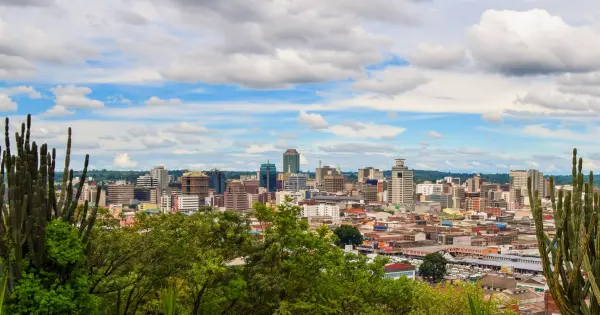
Harare's Central Business District (CBD) faces a property puzzle. Large amounts of office space struggle to find tenants. Yet demand for well-located homes remains strong. That gap creates a possible opportunity for owners and developers: turning underused office buildings into modern apartments.
The idea matches a trend named in Terezim Fortress Properties' Zimbabwe Real Estate Outlook 2026. It points to converting outdated office blocks into apartments as an emerging opportunity in Harare. The target market is young professionals and students who want central, "lock-up-and-go" homes.
A CBD Office Market Under Pressure
Harare's office market has changed in a big way as major businesses move to the suburbs. Knight Frank's Africa Offices Market Dashboard for the second half of 2025 put Harare CBD office vacancy at about 60%. That is not new. Knight Frank put it at a similar level back in 2021. Companies have been moving to suburban office parks because of concerns about infrastructure, access, security and traffic.
This raises a basic question for owners of older office blocks. Does it still make sense to keep a building only for an office market that keeps shrinking? In some cases, the answer may be no. Rather than leave an ageing building half empty, owners may be able to unlock value by changing its use to match where demand is going.
Why Apartments Could Work In The CBD
The appeal of CBD apartments is mostly about location and convenience. A well-designed flat in the city centre could suit young professionals, students and new graduates. It could also suit corporate tenants and anyone who spends most of the working day in or near town.
The idea works best for small "lock-up-and-go" units, not large family homes. Converted offices cannot compete with suburban houses that have big gardens and many bedrooms.
Instead, they could offer:
-
Compact studios and one-bedroom flats
-
Controlled, secure entrances
-
Lifts
-
Reliable backup power
-
Water storage
-
Fibre internet
-
Laundry facilities
-
Shared workspaces
-
Shops and services on the ground floor
-
Parking where possible
The selling point is not space. It is convenience.
Harare Already Has A Conversion Plan On The Table
Perhaps the best sign that this is more than theory comes from Revitus Property Opportunities REIT. The listed property trust owns Chester House at 88 Speke Avenue in the CBD. The building has about 4,306 square metres of lettable space, mostly offices.
Revitus has published plans to change Chester House from office use to licensed residential use. The plans include 75 apartments, laundry facilities, shared workspaces, a restaurant and a bar. Its plans for Electra House, on Samora Machel Avenue, also describe a new model of retail and residential apartments.
This is significant because it applies the model to real Harare CBD buildings. An older commercial building does not have to be written off. It can be repositioned as a mixed-use asset.
The idea has been discussed in Harare for years. In February 2021, the City of Harare said it would assess applications to convert CBD buildings case by case. It noted rising office vacancies and growing demand for homes in the capital.
The City's Plans Could Strengthen The Case
The policy environment may also be moving towards more flexibility. The proposed Harare City Master Plan for 2025 to 2045 calls for a Local Development Plan for "vertically integrated mixed-use structures". It also aims for a modern, vibrant, 24-hour CBD.
If this is carried out well, it could make conversions more attractive. A building could keep shops or restaurants at street level. It could add apartments on upper floors and small offices or co-working space elsewhere. That spreads income across several sources and brings more people into town after working hours.
But Conversion Is Not Simply A Matter Of Renovating Offices
The numbers behind an office-to-apartment conversion need careful work. An office block may look cheap because it is half empty. That does not make it right for apartments.
Developers need to check floor layouts, natural light, plumbing, lift capacity, fire safety, ventilation, parking and the condition of the structure. They also need to know whether the building can carry the services that homes require.
A large open-plan office floor may need major rebuilding to create flats with windows, bathrooms and kitchens. Research from abroad supports this point. A 2025 Brookings study of office-to-residential conversions in six US downtowns found that homes earned more per square foot than offices in all six. But for 16 of the 18 buildings studied, the cost of converting was higher than the value it created.
So viability depends on the building, the price paid, the cost of conversion and the rent the flats can earn. For Harare investors, buying the right building at the right price matters as much as strong demand.
The Lock-Up-And-Go Opportunity
The strongest opening may not be luxury flats. Harare has a large unmet need for affordable and middle-income housing. That leaves room for a different kind of CBD home: small, secure and professionally managed, with the basics and without the cost of a big suburban house.
A 35-square-metre studio or a 50-square-metre one-bedroom flat may make far more sense for a young professional than a three-bedroom house in the suburbs. The same could apply to students and to short- or medium-term corporate tenants. The location, security and management just need to be right.
Infrastructure Will Determine Which Buildings Win
One of the biggest challenges is that the same problems pushing businesses out of the CBD could also put off residents. A conversion cannot just put kitchens and bedrooms into an old office block and expect tenants to come. Reliable power and water become critical.
For a modern CBD apartment block, investors may need to plan for solar power, backup generators, water storage, efficient plumbing, fibre, security systems and waste management.
These should be part of the core project, not optional extras. This mirrors a wider shift in Zimbabwe's property market, where reliable utilities are becoming part of what buyers and tenants pay for.
A More Vibrant CBD Could Create A Virtuous Cycle
There is also a wider urban argument for conversions. More people living in town could mean more demand for supermarkets, restaurants, pharmacies, gyms, laundries and corner shops. That brings activity after hours. It helps fix one of the biggest problems of an office-only CBD: crowds arrive in the morning and disappear in the evening.
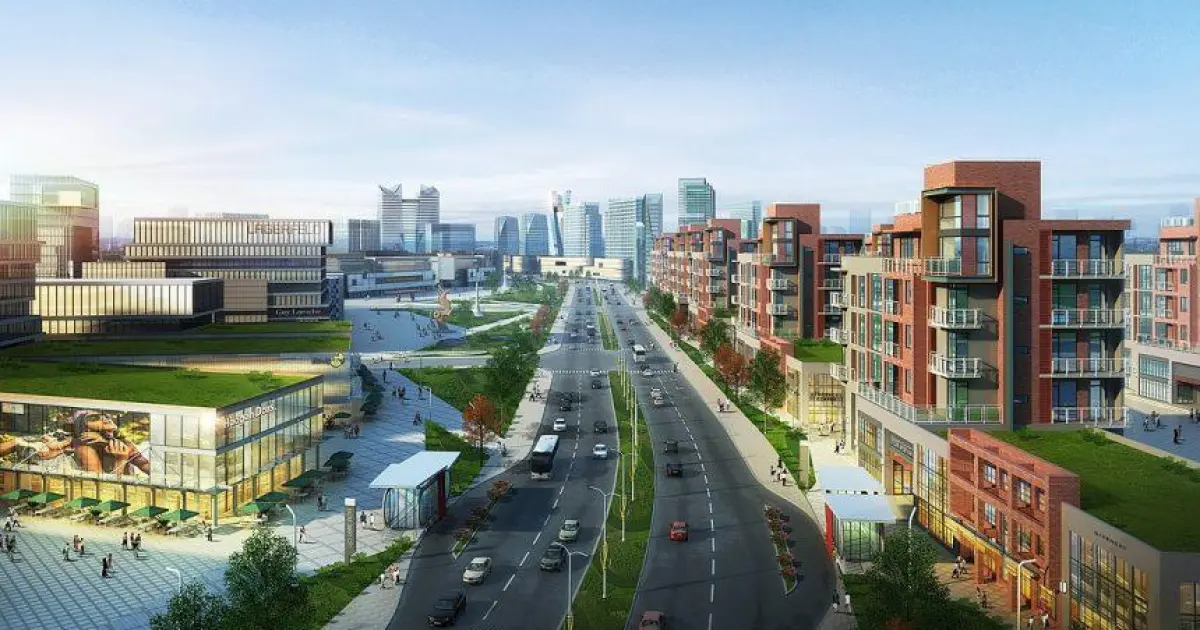
The mixed-use direction in the City's master plan aims partly at a livelier, round-the-clock city centre. Conversions could therefore be more than single property projects. They could form part of a wider plan to renew the CBD.
The Investment Case
For investors, it all comes down to creating value. An ageing, half-empty office block may have poor prospects as offices. But if it can be bought at the right price and converted efficiently, the same building could earn a mix of rental income. The sum looks like this:
Purchase price + conversion costs + professional fees + financing + compliance costs + contingency = total development cost.
That total must then be compared with the prices or rents the finished flats can earn. Investors should also model occupancy, management costs, upkeep, utility bills and finance costs, rather than just headline rents. In other words, a cheap office block is not automatically a good conversion. A good conversion is one where the finished building is worth clearly more than the total cost of creating it.
The Future May Be Mixed-Use Rather Than Office-Only
Harare's CBD is unlikely to stop being a business centre. But filling whole buildings with offices is getting harder in parts of the market. Knight Frank's research shows firms continuing to move to suburban office areas. Meanwhile, the City's planning direction points towards more mixing of homes and businesses.
This creates a chance to rethink what a CBD building should be. The next generation could have shops at street level, flats above, flexible workspace on some floors and shared amenities throughout. For owners sitting on empty office space, that may be a better future than waiting for the old office market to return.
The Bottom Line
Harare's CBD office vacancy problem could become part of its housing opportunity. Businesses keep moving to the suburbs, and demand for homes remains strong. Turning old office blocks into small, secure, well-serviced apartments could help investors give ageing buildings a new life.
The opportunity is not universal, though. The structure, purchase price, conversion cost, planning approval, services and target tenant must all line up. If they do, yesterday's empty office block could become tomorrow's sought-after city home. It could help investors unlock value while helping to renew Harare's city centre.
Sources
-
Terezim Fortress Properties, "Zimbabwe Real Estate Outlook 2026"
-
Revitus Real Estate Trust, "Chester House", 29 November 2023
-
Revitus Property Opportunities REIT, investor presentation, October 2023
-
The Herald, "Harare City evaluates proposals on properties", 15 February 2021
-
The Herald, "Harare City 2025–2045 Masterplan summary on establishing a modern CBD", 1 August 2025
-
Brookings, "A community guide to office-to-residential conversion: Part 1, economics", 9 July 2025