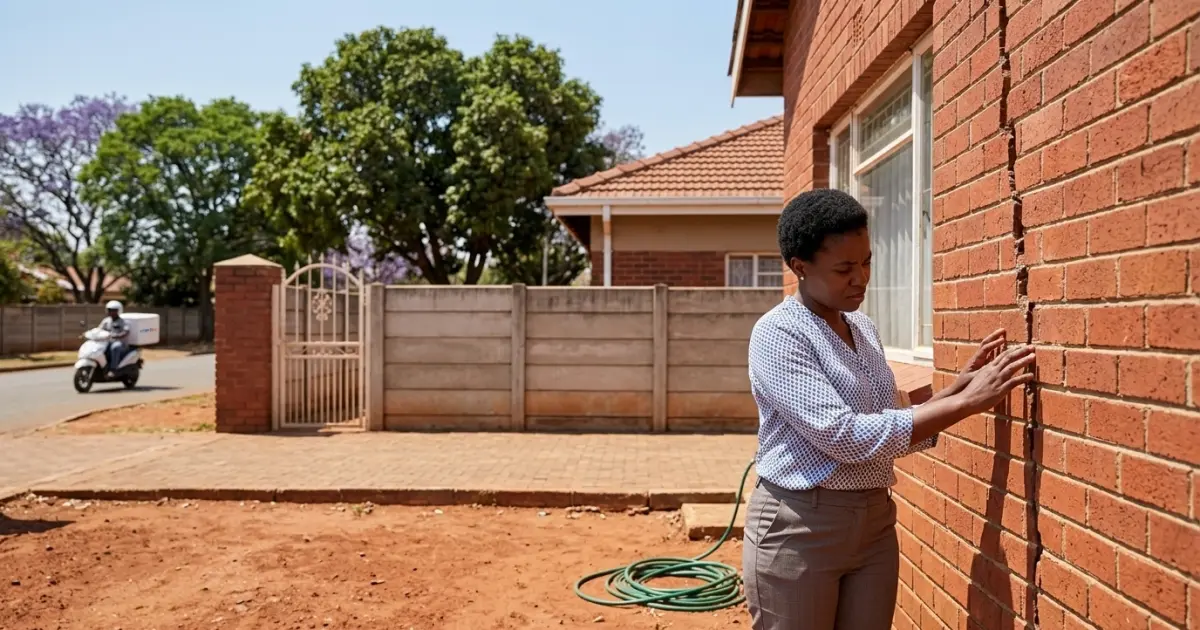
Residents of Marlborough have spent nearly two years worried about their homes. Their complaint is simple. Blasting linked to mining at one property in the suburb, they say, has cracked houses across the neighbourhood.
Ward 41 Councillor Kudzai Kadzombe says residents first called her in October 2024 after hearing repeated underground blasts. She reported it to the City of Harare's Development Control Unit and to the Environmental Management Agency (EMA). Both bodies reportedly told the operators to stop. The digging carried on.
By 2026 the damage was hard to ignore. Kadzombe says structural engineers inspected affected homes and found serious cracking. Some houses, she warns, are now unsafe.
Then the matter reached the courts. In August 2026 a Harare man appeared before a magistrate charged with illegal possession of explosives, blasting, and prospecting for minerals without a licence. He was granted US$500 bail. The State says police recovered explosives, cable fuses, a drill bit, a windlass, rope and a demolition hammer from the property. He has not been convicted, and the case is still before the courts.
Then came a twist. Reports say six people arrested at the site were released once police established they were only tenants. The property owners were acquitted after producing mining permits. That is in a residential suburb where prospecting is not supposed to happen at all.
Mines and Mining Development Minister Dr Polite Kambamura has said Government does not issue mining licences for urban residential areas. He has pledged to stop the Marlborough operation. Residents say the mine was cleared by that same ministry. How those permits came to exist is now under investigation.
For homeowners, that contradiction is the whole problem.
What the Law Says About Mining in a Suburb
This part is clearer than the Marlborough case makes it look.
Section 31 of the Mines and Minerals Act (Chapter 21:05) sets out ground that is not open to prospecting. It includes land inside the surveyed limits of any city, town, township or village. It also includes a fifty-metre belt just outside those limits. In plain terms, a registered suburb is off-limits, and so is the strip of land around it.
The Act adds another layer. Prospecting on private land requires the written consent of the owner. So a permit alone is never the full story. The land itself has to be open to prospecting in the first place.
Environmental law adds a third layer. Some projects cannot start until EMA grants an Environmental Impact Assessment certificate. Mining and quarrying are on that list. So are housing developments, industry and infrastructure. The rule sits in section 97 of the Environmental Management Act (Chapter 20:27), read with its First Schedule and Statutory Instrument 7 of 2007. Starting one of these projects without a certificate is an offence, and the penalties include jail time.
None of this is obscure. It is the framework that is supposed to keep heavy industry out of the street where you live.
Cracks Are Not Always What They Look Like
A crack in a wall does not automatically mean the structure is failing. Cracks come from many causes. Foundation movement. Changing soil conditions. Poor original construction. Water problems. Outside vibration.
That is why a professional assessment matters more than a guess.
The difference in cost is large. A house needing US$5,000 of cosmetic repairs has a manageable problem. A house needing foundation stabilisation or major structural work is a different situation entirely. It costs far more, and it becomes much harder to sell.
This is why filling cracks and repainting before you know the cause is a mistake. You may be hiding the evidence of a problem that is still growing.
Why the Neighbourhood Matters as Much as the House
Buyers tend to inspect the building. Roof, plumbing, electrics, bathrooms, kitchen, general condition. All necessary.
Fewer buyers look over the wall.
Things worth asking about on neighbouring stands include:
● Mining, quarrying or sand extraction
● Major excavations
● Multi-storey construction
● Industrial activity
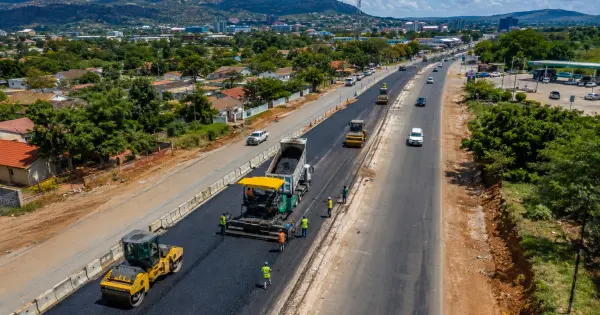
● Road projects
● New commercial developments
● Land-use or rezoning changes
● Drainage and infrastructure works
Not every development next door is a threat. Many raise values. The point is that you should know what is coming before you sign, not after.
Marlborough Is Not the Only Case
Similar conflicts have played out elsewhere in Zimbabwe.
In Epworth, residents of Rockview and Adelaide protested against blasting at a quarry, saying it disturbed them and might crack their houses. The local board said the operator was working within the law.
In Bulawayo's Pumula North, residents blamed quarry blasting for cracks in their homes and in nearby schools. A wall at Amaswazi Primary School fell after vibrations from the site.
Kwekwe shows how far this can go. The city sits over a network of old tunnels around the Globe and Phoenix mine. In March 2023 a classroom floor at Globe and Phoenix Primary School caved into a shaft, injuring pupils. The school was later closed. A house near the same compound was swallowed by a tunnel.
What makes Marlborough different is the setting. This is an established, built-up low-density suburb where owners had already put serious money into their properties.
What This Does to Property Values
There is no fixed percentage that applies to every affected house. Anyone who quotes one is guessing.
A house next to a temporary construction site may recover fully once the work ends. A house next to an unresolved dispute involving noise, vibration, dust and possible structural risk is a harder sell.
Picture two similar Marlborough houses, each worth around US$150,000. One sits on a quiet street. The other sits beside an active dispute. A buyer will negotiate much harder on the second one, even before any structural defect is confirmed.
The reason is simple. Buyers price uncertainty.
If a buyer thinks they may inherit a dispute, an expensive repair bill or a difficult resale, they will either demand a discount or walk away. That affects both what the owner can sell for and how long it takes.
What to Do If You Think Blasting Has Damaged Your Home
Documentation is the priority. Without it, you have a complaint. With it, you have a case.
1. Get an independent structural assessment.
Do not rely on what you can see. A qualified structural engineer can tell you whether cracks are cosmetic or structural. Ask for a written report. Keep the photographs, measurements and recommendations.
2. Record the condition of the property over time.
Photograph cracks regularly. Note the date and the exact location of each one. A dated record shows whether damage is spreading. It becomes important if an insurance claim, a compensation dispute or legal action follows.
3. Keep a log of the blasting itself.
Write down dates and times, along with what you noticed: vibration, dust, falling debris, new cracks. Ask neighbours to keep their own separate records. Several independent logs are far more persuasive than one.
4. Report it to the right offices.
Building control and development matters go to the City of Harare's Department of Works, through your district office. Suspected environmental breaches go to EMA. Explosives, unlicensed blasting and mining without a permit are police matters. Report to all of them, in writing, and keep copies.
5. Do not pay for major repairs until you know the cause.
If the ground is still moving, or the vibration is still happening, the crack will come back. You will have spent the money twice.
The Building-Control Side
The City of Harare requires an approved building plan before construction starts. Council inspects at set stages, from setting out through compaction, foundation, window level and roof level. Skipping a stage carries a penalty. Once a building is finished, the owner should obtain a certificate of occupation confirming it complies with the Model Building By-Laws.
This matters beyond new construction. The quality of the original build, the land use around it, and later changes on neighbouring stands all shape how secure a house is over decades.
Every homeowner should keep a property file. Put the approved plans in it, along with the certificate of occupation, title or ownership documents, inspection records and receipts for major repairs. When something goes wrong, that file is the difference between proving your position and arguing it.
What Buyers Should Take From This
An inspection should not stop at the boundary wall.
Before buying an established home, ask what is happening on the stands around it. Someone paying US$120,000 for a house in an established Harare suburb will naturally check the building. They should also ask what the vacant plot next door is zoned for and whether anything is planned there.
If you see persistent cracking, unusual ground movement, or signs of a past dispute with a neighbouring development, pay for an independent professional opinion. It is cheap next to the purchase price.
For diaspora buyers this matters even more. Photographs from a seller or a relative are not due diligence. Commission an independent inspection and obtain the planning and development information before you transfer a large sum.
The Bigger Lesson
Marlborough is about more than cracked walls. It is about how secure your ownership really is.
You can do everything right inside your boundary and still be affected by what happens outside it. Property value cannot be separated from land use, planning decisions, environmental enforcement and what your neighbours are allowed to do.
The Marlborough case is still moving through the courts and through Government investigation. But the lesson for owners and buyers is already clear. When something threatens the physical condition of your property, document it, get an independent professional opinion, and involve the authorities early. Problems like this only get more expensive with time.
So for anyone buying in Harare, the question is not only "is this house in good condition?"
It is also "is the surrounding area likely to keep it that way?"
Sources
● Environmental Management Act (Chapter 20:27), section 97 and First Schedule, as read with Statutory Instrument 7 of 2007 — Environmental Impact Assessment certificate required before implementing prescribed projects, including mining and quarrying, housing developments, industry and infrastructure. Environmental Management Agency, www.ema.co.zw. Accessed September 2026.
● Mines and Minerals Act (Chapter 21:05), section 31 — ground not open to prospecting, including land within the surveyed limits of any city, town, township or village and a fifty-metre belt outside those limits, and the requirement for written owner consent on private land. ZimLII. Accessed September 2026.
● ZimEye — "Marlborough Houses Are Collapsing Following Blast Mining At One Home, Says Councillor Kadzombe", 2 August 2026. Councillor Kudzai Kadzombe's account of the October 2024 reports, referrals to the City of Harare Development Control Unit and EMA, and structural engineers' findings.
● NewsDay Zimbabwe — "Miner prospects for gold in Harare's leafy suburb, gets arrested", August 2026. Court appearance before magistrate Artwell Sanyatwe, US$500 bail, and the State's outline of the case.
● Southerton Business Times — "Harare man in court over alleged illegal gold mining in Marlborough", 7 August 2026. Charges of illegal possession of explosives, blasting and prospecting without a licence, and the items recovered by police.
● Bulawayo24 / ZimHub News — "Fresh twist to Marlborough mining saga", August 2026. Release of six tenants, acquittal of property owners after producing permits, and the investigation into how those permits were issued.
● NewsDay Zimbabwe — "Chinese mine blasts irk Epworth residents". Rockview and Adelaide residents' complaints about blasting and the Epworth Local Board's response.
● The Zimbabwe Independent — "Bulawayo quarry endangers schools, houses". Pumula North residents' complaints about cracks and the wall that fell at Amaswazi Primary School.
● Al Jazeera — "A city at risk of collapsing: The cost of the search for gold in Zimbabwe", 5 September 2024. Globe and Phoenix Primary School closure and the house swallowed by a tunnel near the Globe and Phoenix compound in Kwekwe.
● Mining Index Zimbabwe — "Seven pupils injured as classroom block collapses into mine shaft", 16 March 2023. The Globe and Phoenix Primary School classroom collapse.
● City of Harare — "Adhere to building by-laws, residents urged", hararecity.co.zw. Approved building plan requirement, the six construction inspection stages, penalties for skipping a stage, and certificates of occupation under the Model Building By-Laws.
● City of Harare, Department of Works — building inspectorate functions under the Model Building By-Laws and the Urban Councils Act (Chapter 29:15). www.hararecity.co.zw. Accessed September 2026.
● Ministry of Mines and Mining Development — ministerial statements on mining in urban residential areas. www.mines.gov.zw. Accessed September 2026.