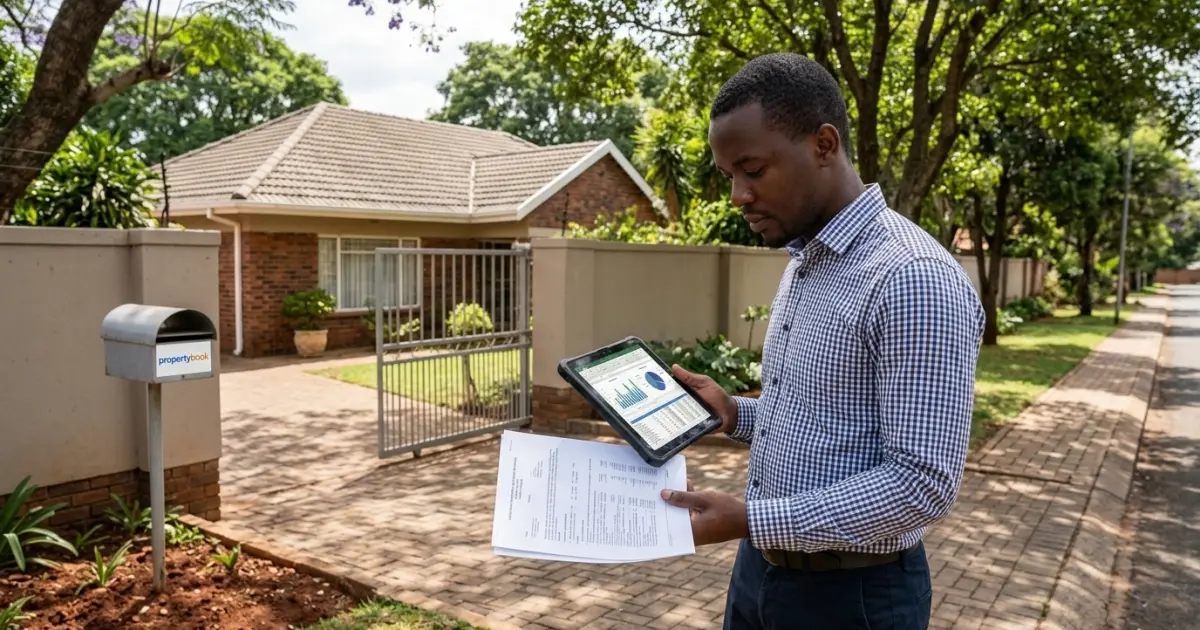
Finding the right property is the first step. The surprise, for most first-time buyers, comes later — when they discover the purchase price is not the final amount they will pay.
Beyond the agreed price sit several legal and statutory costs. Together they can add a meaningful amount to the transaction, and they arrive at the exact moment your savings are thinnest.
Understanding them before you sign an agreement of sale is how you budget properly and avoid unnecessary pressure.
Why Transfer Costs Matter
In Zimbabwe, ownership does not pass the moment you pay. The transaction has to go through a legal conveyancing process, and taxes, duties and registration requirements must be satisfied before the property is registered in your name.
These are not hidden charges. They are simply costs buyers overlook in the excitement of finding a home.
Who Pays What
This is the part most guides get wrong. Some costs fall on the buyer, some on the seller, and confusing the two produces budgets that are badly off. Here is the split.
Propertybook tip: ask your conveyancer for a written quotation that separates professional fees from disbursements. A quote that gives one number tells you nothing about what you are actually paying for.
So What Should a Buyer Actually Budget?
Add up the buyer's side on an ordinary cash purchase — stamp duty, conveyancing fees plus VAT, IMTT on the transfer of funds, and Deeds Registry charges — and most buyers land somewhere between roughly 5% and 9% of the purchase price.
That range moves with the value of the property, because stamp duty runs on a sliding scale. It also moves depending on whether you are taking a bond, which adds a separate registration fee.
You will sometimes see higher figures quoted, in the region of 8% to 12%. Those numbers usually describe the total cost across both parties, once the seller's agent commission and capital gains tax are folded in. That is a legitimate way to look at a transaction, but it is not what a buyer pays. Know which figure you are being quoted.
Stamp Duty
Stamp duty is one of the largest statutory costs of buying property. It is a government tax payable before ownership can be registered, administered under the Stamp Duties Act [Chapter 23:09].
It is charged on a sliding scale, calculated on the purchase price or the assessed value of the property, whichever is higher. The rate commonly falls between about 1% and 4%.
Rates change through national budgets and legislative amendments. Confirm the applicable rate with your conveyancer or ZIMRA before you finalise a budget. Do not rely on a figure you read last year.
Conveyancing Fees
Property transfers in Zimbabwe must generally be handled by a registered conveyancer. The conveyancer prepares the legal documents, conducts title searches, deals with government offices, registers the transfer and makes sure ownership passes properly.
Fees follow the Law Society of Zimbabwe tariff. For the transfer of immovable property the fee is set at 3% of the purchase price or the value of the property, whichever is greater. If you are registering a mortgage bond, that carries a separate fee of 2.5% of the amount secured. VAT is charged on conveyancing fees, and conveyancers may also recover reasonable disbursements.
Ask for the detailed quotation. You are entitled to know what each line is for.
ZIMRA Clearances
Certain tax obligations have to be settled before a transfer completes. ZIMRA administers the taxes attached to property transactions and issues the clearances the Deeds Registry will want to see.
The one that most often causes delay is capital gains tax clearance on the seller's side. Incomplete tax documentation stalls registration, so it pays to raise this early rather than discovering it at lodgement.
Deeds Registry Registration
Once the legal requirements are met, documents are lodged with the Deeds Registry for registration. These charges are usually folded into the conveyancer's final estimate, but always confirm what is included.
There is a new consideration in 2026. Under Statutory Instrument 76 of 2025, holders of paper title deeds must submit them for validation and replacement with securitised digital deeds within 24 months of the regulations coming into force on 18 July 2025. The national programme launched in May 2026. Before you commit to a purchase, ask your conveyancer where the seller's deed stands in that process. A deed caught mid-validation can slow a transfer down.
Rates Clearance and Other Certificates
Before transfer, the seller generally has to obtain a rates clearance certificate from the local authority. Depending on the property, you may also meet costs for:
-
Administrative searches
-
Copies of title documents
-
Survey or sectional title documentation
Some of these fall on the seller. They still matter to you, because they influence negotiations and completion timelines. A seller sitting on large rates arrears is a seller whose transfer will take longer.
Questions Every Buyer Should Ask
Before paying a deposit, ask your estate agent or conveyancer:
-
What transfer costs should I expect on a property at this value?
-
Which costs are payable by me, and which by the seller?
-
Are your quoted legal fees inclusive of disbursements and VAT?
-
What taxes must be paid before transfer, and by whom?
-
Has the title deed been validated under SI 76 of 2025?
-
How long is this transfer likely to take?
Asking these upfront prevents the arguments that surface later.
Final Thoughts
Buying property is not just about agreeing a price. It is about understanding the full cost of the transaction, and doing your due diligence before you sign rather than after.
A clear budget does more than prevent unpleasant surprises. It makes the whole process easier for everyone involved: buyer, seller and the professionals in between. The purchases that go smoothest are almost always the ones where the buyer knew the true cost before signing the agreement of sale.
This article is general information, not legal or tax advice. Rates and thresholds change. Confirm current figures with ZIMRA or a registered conveyancer before you budget.
Sources and References
-
Stamp Duties Act [Chapter 23:09] — zimlii.org
-
Deeds Registries Act [Chapter 20:05] — zimlii.org
-
Statutory Instrument 76 of 2025, Deeds Registries Regulations, 2025
-
Capital Gains Tax Act [Chapter 23:01], section 6 — zimlii.org
-
Finance Act [Chapter 23:04], section 22G on IMTT
-
Law Society of Zimbabwe — conveyancing fees tariff. lawsociety.co.zw
-
Zimbabwe Revenue Authority (ZIMRA) — property taxes and tax clearance. zimra.co.zw