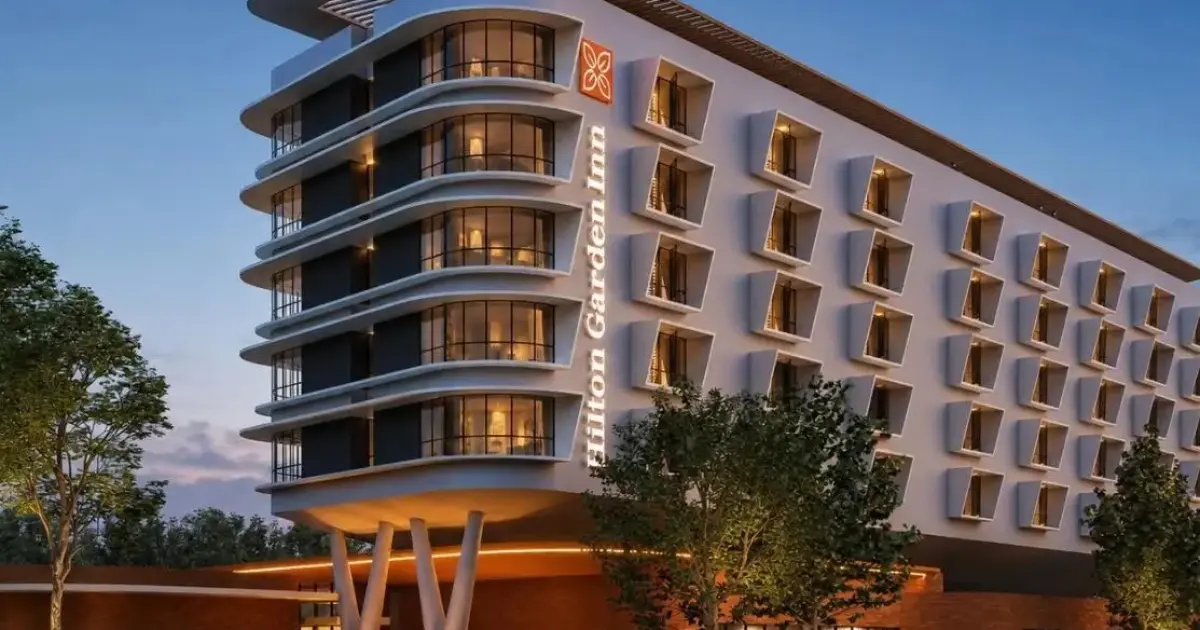
Zimbabwe’s property market is getting a fresh vote of confidence from some of the biggest names in hospitality and real estate. Hilton has signed an agreement to develop a 140-room Hilton Garden Inn in Harare’s Highlands Precinct. It will be the global group’s first hotel in Zimbabwe and is expected to open in early 2029.
At almost the same time, Emaar Properties founder Mohamed Alabbar held talks with President Emmerson Mnangagwa about a major premium hospitality investment in Zimbabwe. An Emaar delegation is expected in the country later this September to inspect sites and finalise project details.
Together, these developments point to an important shift. International investors are not only looking at Zimbabwe’s residential market. They are increasingly weighing up commercial, hospitality, mixed-use and tourism-linked real estate. For property owners and investors, the effects could reach well beyond the hotel gates.
Hilton Makes Its Zimbabwe Debut
Hilton announced the deal on August 26, 2026, at the ZimReal property investment forum in Harare. Its development partner is Terrace Africa, the company behind the Highlands Precinct. The precinct is a large mixed-use development bringing together offices, shops, restaurants, homes, hotels and conference facilities.
The hotel is expected to include an all-day restaurant with a terrace, a lobby café and bar, a gym, a pool and meeting rooms. That positions it for both business and leisure travellers. The choice of Highlands is significant. The suburb is an established residential and diplomatic area, about 20 to 25 kilometres from Robert Gabriel Mugabe International Airport, and the precinct is being designed as a destination rather than just another building.
Terrace Africa’s plans describe about 200,000 square metres of mixed-use space, including offices, retail, more than 350 apartments, restaurants, wellness facilities and an international hotel with conference space. That mix could create a new commercial centre of gravity in northern Harare.
Why a Hilton Brand Matters Beyond the Hotel
An international hotel brand can do more than add rooms to a city. It can attract business travellers, conferences, corporate events and international visitors who might otherwise choose competing destinations in the region. That creates demand for nearby businesses such as restaurants, transport operators, shops, event companies and professional services. It can also make nearby commercial property more attractive.
Think about a company looking for office space. A location close to an international hotel, conference facilities, restaurants and shops may appeal more than an isolated office block. The same idea applies to homes. Executives, consultants, diplomats and corporate visitors can create demand for serviced apartments, furnished rentals and longer-stay accommodation nearby. In other words, a hotel’s economic footprint can stretch well beyond its own boundary.
Emaar Could Bring a Different Proposition
Emaar’s proposed investment could be even more significant because of the company’s global profile. The Dubai-based developer is best known for the Burj Khalifa and Dubai Mall. Its businesses span real estate, retail, hospitality and leisure, and its hotel brands include Address Hotels + Resorts and Vida Hotels and Resorts.
Emaar is also a financial heavyweight. It reported property sales of about AED26.6 billion (US$7.2 billion) in the first half of 2026, revenue of AED23.9 billion and a revenue backlog of about AED164.9 billion.
However, investors should be careful about what has actually been confirmed. After meeting Mr Alabbar, President Mnangagwa said plans had been finalised for a major investment in premium hospitality and luxury hotels, and that an Emaar delegation would visit to inspect sites and finalise details. The sites, number of hotels, investment value, brands and completion dates have not been made public.
It is also not the first contact. Mr Alabbar met President Mnangagwa in Dubai in February 2024, when hotels and luxury apartments in Zimbabwe were discussed. For now, Emaar’s plans should be seen as a developing opportunity, not a confirmed project pipeline.
Why Victoria Falls Matters
Victoria Falls is already Zimbabwe’s strongest international tourism destination. That gives premium hospitality investors a very different proposition from Harare.
Tourism numbers are moving in the right direction. Zimbabwe recorded 1,777,569 international arrivals in 2025, up about 10 percent from 1,613,901 in 2024. The momentum has continued into 2026. International arrivals reached 384,561 in the first quarter, up 11 percent year on year, and tourism receipts reached US$537 million in the first half of the year, up 6 percent.
That creates an important investment argument. If Zimbabwe can attract more high-spending visitors and persuade them to stay longer, the benefits can spread into accommodation, restaurants, transport, entertainment, retail and residential property.
The Masuwe Factor
Victoria Falls is also seeing a wider infrastructure push. In April 2026, Cabinet approved a public-private partnership for bulk infrastructure on Lot 1 of Jafuta Estate, inside the Masuwe Special Economic Zone. The state-owned Mosi Oa Tunya Development Company is contributing 271.5 hectares of land, valued at US$25.6 million, for a 39 percent stake. A consortium led by JR Goddard is committing US$66.9 million for infrastructure in return for 61 percent.
The work includes roads, a 13-kilometre water pipeline, a water treatment plant, sewer systems and a power substation. The wider Masuwe plan includes hotels, villas, holiday homes, a golf estate, medical centres and a commercial and financial services hub.
This matters for property investors because big tourism projects rarely stand alone. Once roads, water, electricity and telecommunications improve, the value of surrounding land can change. That does not mean every nearby property will rise in value. But better infrastructure can make once-marginal sites commercially viable and widen the range of uses developers can consider.
Harare Could Benefit Differently
Harare’s opportunity is less about leisure tourism and more about business, conferences, diplomacy and regional trade. The city remains Zimbabwe’s main commercial centre and a key diplomatic and business gateway.
That is why the Hilton’s place inside a mixed-use precinct is so relevant. A business traveller spending several days in Harare needs more than a hotel room. They need restaurants, meeting space, transport, shopping, banking, offices and sometimes a place to stay for longer.
A successful mixed-use development can capture several of these spending needs in one connected location. This could strengthen the case for similar commercial nodes elsewhere in Harare, especially as companies continue to move out of the CBD into the suburbs.
Could Nearby Property Values Rise?
Potentially. But investors should not assume that an international hotel automatically means a property price boom. The link between hotel investment and nearby property values is more complicated.
A successful hotel can increase:
-
Foot traffic: More visitors and business activity can support nearby shops and restaurants.
-
Employment: Hotels create direct and indirect jobs, which can raise demand for services and nearby housing.
-
Infrastructure: Large developments can encourage better roads, utilities and telecommunications.
-
Commercial demand: Businesses serving visitors and the hotel may look for nearby office and retail space.
-
Rental demand: Corporate visitors and staff can support demand for apartments, furnished rentals and other accommodation.
-
Land-use potential: Areas that are mostly residential may slowly turn into mixed-use commercial corridors.
But the opposite can also happen. If development brings congestion, heavy traffic, noise or pressure on infrastructure, some homes nearby may become less attractive.
Tourism Growth Strengthens the Investment Case
The timing of these investments is also worth noting. The US International Trade Administration describes tourism as Zimbabwe’s third-largest economic sector after mining and agriculture. It reports that investment in the sector grew by 11 percent to US$190.5 million in 2024.
For international hotel operators, the rising arrival numbers are an important demand signal. For property investors, they suggest that tourism-linked real estate deserves closer attention.
What Should Zimbabwean Property Investors Watch?
These announcements should not push investors to simply buy the nearest piece of land and wait. Instead, investors should watch several indicators:
-
Infrastructure delivery: Roads, water, electricity, drainage and telecommunications can matter more to property performance than the name of the hotel next door.
-
Commercial activity: Look for proof that offices, restaurants, shops and other businesses are actually following the big development.
-
Occupancy and visitor numbers: A hotel opening is not the same as a successful hotel. Long-term impact depends on steady demand.
-
Planning and zoning: Watch whether councils allow nearby properties to change use to offices, guesthouses, shops or higher-density housing.
-
Rental demand: If corporate activity grows, nearby homes could benefit from demand for executive rentals, furnished apartments and medium-term stays.
-
Supply: Watch for competing projects. If many new apartments, offices or hotel rooms arrive at once, extra supply could limit rent and price growth.
A Signal of Confidence – But Not a Guarantee
The Hilton signing and the proposed Emaar investment matter because global companies do not usually enter a market without studying its commercial potential. Hilton’s first Zimbabwe hotel comes as it grows its African footprint, while Emaar is now assessing premium hospitality opportunities in the country.
But investors should separate confidence from certainty. Hilton has a signed agreement for a specific 140-room hotel expected to open in early 2029. Emaar is much earlier in the process, with site inspections and project details still being worked out. Neither announcement guarantees that every nearby property will rise in value. What they do show is that Zimbabwe’s hospitality and commercial property markets are attracting renewed international attention.
What It Means for Zimbabwe’s Property Market
The biggest story may be larger than two hotel projects. Zimbabwe is positioning itself to capture more value from tourism, business activity is creating demand for commercial property, and better infrastructure can make surrounding locations more valuable.
For Harare, the Hilton Garden Inn could strengthen the Highlands corridor as a mixed-use business and lifestyle destination. For Victoria Falls, the infrastructure push around Masuwe is expanding what the town can offer investors.
For property investors, the lesson is simple: do not only look at the building going up. Look at the economic ecosystem being built around it. The next big opportunity in Zimbabwean real estate may not be the biggest house or the tallest building. It could be the property sitting at the centre of a growing network of hotels, offices, restaurants, homes, tourism facilities and infrastructure.
That is why the Hilton and Emaar developments deserve attention far beyond the hospitality sector.
Sources
-
Africa.com – Hilton to enter Zimbabwe with signing of Hilton Garden Inn Harare Highlands (Hilton release), August 2026. https://www.africa.com/whats-happening/hilton-to-enter-zimbabwe-with-signing-of-hilton-garden-inn-harare-highlands
-
Tourism Update – Hilton enters Zimbabwe, September 2026. https://www.tourismupdate.com/article/hilton-enters-zimbabwe
-
Zimbabwe Situation (The Herald) – Hilton inks landmark deal for Harare Garden Inn hotel, August 2026. https://www.zimbabwesituation.com/news/hilton-inks-landmark-deal-for-harare-garden-inn-hotel/
-
Africa.com – Exciting Highland Park Precinct to bring world class amenities to Harare (Terrace Africa). https://africa.com/exciting-highland-park-precinct-to-bring-world-class-amenities-to-harare-zimbabwe
-
Zimbabwe Situation (The Herald) – Major Dubai developer eyes luxury hotels in Zimbabwe, September 2026. https://www.zimbabwesituation.com/news/major-dubai-developer-eyes-luxury-hotels-in-zimbabwe/
-
Billionaires.Africa – Mohamed Alabbar moves closer to major luxury hotel investment in Zimbabwe, 7 September 2026. https://www.billionaires.africa/2026/09/07/billionaire-mohamed-alabbar-moves-closer-to-major-luxury-hotel-investment-in-zimbabwe/
-
Emaar Properties – H1 2026 results press release, 7 August 2026. https://www.emaar.com/en/press-release-listing/emaars-net-profit-before-tax-increased-by-23-to-aed-12-8-billion-us-3-5-billion-revenue-backlog-reaches-aed-164-9-billion-us-44-9-billion-in-h1-2026
-
Equity Axis – Zimbabwe approves USD 92mn PPP to unlock land at Victoria Falls, 22 April 2026. https://equityaxis.net/post/19018/2026/4/zimbabwe-approves-usd-92mn-ppp-to-unlock-1-200-hectares-at-victoria-falls-the-largest-single-land-backed-infrastructure-deal
-
ZimLive – Government approves Masuwe joint venture, 2026. https://www.zimlive.com/?p=56962
-
Eulerpool – Zimbabwe tourist arrivals (2024–2025). https://eulerpool.com/macro/zimbabue/tourist-arrivals
-
MICE Travel Advisor – Zimbabwe tourism receipts reach US$537 million in H1 2026, September 2026. https://www.micetraveladvisor.com/news/article/zimbabwe-tourism-surges-as-us537-million-revenue-fuels-a-new-travel-boom/
-
U.S. International Trade Administration – Zimbabwe Country Commercial Guide: Travel and Tourism. https://www.trade.gov/country-commercial-guides/zimbabwe-travel-and-tourism