Not long ago, luxury in Harare meant one thing. A big house. A big yard. A quarter-acre of green lawn in Borrowdale or Highlands. That was the dream.
Buyer priorities have shifted. A different kind of luxury has taken hold: the gated cluster community.
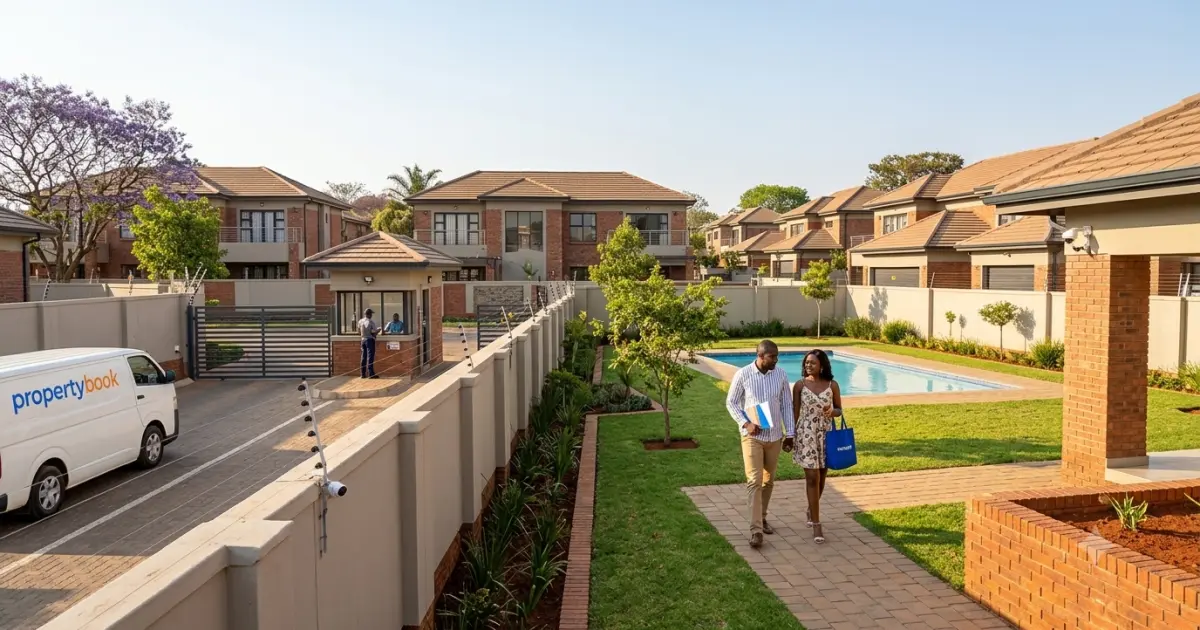
Across Harare, large residential stands are being redeveloped into gated cluster developments offering something buyers now value more than square metres — security, reliable infrastructure and convenience. For young professionals, downsizers, returning diaspora investors and small families, luxury is no longer the size of the yard. It is peace of mind.
What is a cluster home?
A cluster home is part of a small, shared community. Homes or apartments sit close together on one secure property. They often share walls, gardens, and amenities.
You usually get one gate, one guard team, and shared services. That can include boreholes for water, solar for power, and fibre for internet. You trade a large private yard for security and lower upkeep.
From Single Homes to Cluster Developments
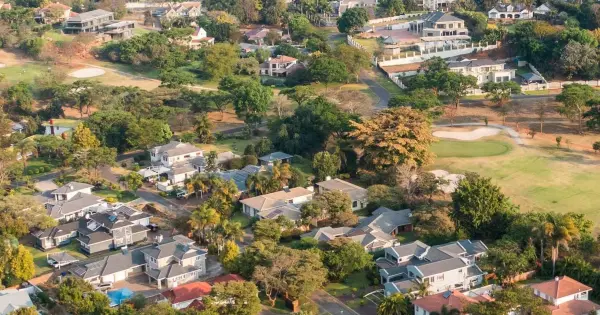
Suburbs like Borrowdale, Mount Pleasant, Marlborough, Greendale and Highlands have seen a clear shift, with large stands subdivided into cluster housing.
Two forces are driving it. First, Harare continues to face significant housing demand, which pushes developers to use well-located land more efficiently. The Zimbabwe National Spatial Planning Framework (2023-2030) identifies densification as a central part of urban planning strategy for metropolitan areas, and cluster housing sits squarely inside that. Second, many buyers now simply prefer secure, low-maintenance properties to traditional homes that demand constant upkeep.
As more developers convert large properties into modern townhouse complexes, cluster developments have become one of the fastest-growing segments of the residential market. Propertybook data shows Harare dominates this market, with over 300 townhouse complexes listed across the city.
Why the shift is happening
The reason is practical. City services in Harare are under strain.
Water does not always flow. Power cuts are common. Zimbabwe spends millions of US dollars every month importing electricity, and the national grid still falls short of peak demand. Against this backdrop, homes with their own borehole, solar, and security can keep water and power running when public services fail.
A real example: Millennium Heights
WestProp's Millennium Heights in Borrowdale West is one example of the model.
It is a master-planned community built around a “walkable” design. There is Millennium Park with a lake and gardens, plus swimming pools, a tennis court, a gym, and a clubhouse. The apartments come with backup water, solar, fibre internet, and metered gas.
On uptake, WestProp reports that Block 6 has sold out, and off-plan sales for Block 7 are now under way.
What it costs
Here is pricing from current Propertybook listings. Apartments are handed over in “shell” form, which means the outer structure, windows, and doors are done, and you finish the inside yourself:
- Bed-sitter (studio): from US$65,000
- One-bedroom apartment: US$110,000
- Two-bedroom apartment: US$175,000
- Three-bedroom penthouse: US$230,000
Furnished units in the development are also let out to corporate tenants, diplomats, and short-stay visitors.
Security Has Become the New Luxury
Gated access, perimeter walls, electric fencing, CCTV and organised homeowners associations are now headline selling points.
Some of these were once treated as expensive extras. CCTV is a good example. Today buyers treat them as standard features of a modern home, and a development without them looks dated rather than economical.
For buyers who travel often, live abroad, or simply want fewer things to worry about, these features cut both security risk and day-to-day management. The result is a lock-up-and-go lifestyle that a standalone house on a large stand struggles to match.
What You Give Up
Cluster living is not all upside, and a buyer's guide that pretends otherwise is not much use.
You trade autonomy for convenience. Homeowners association rules govern what you can build, park, paint and sometimes even keep as a pet. Levies are compulsory and they rise. Your neighbours are close, so noise and privacy are real considerations. And a poorly run association can turn a good development into a difficult place to live.
None of that outweighs the benefits for most buyers in this market. But it should shape which development you choose.
Reliable Water Is Now a Necessity
Water security has moved from a nice-to-have to a deciding factor.
The scale of the problem explains why. Harare's two treatment plants were designed to produce 704 megalitres a day, against estimated demand of 800 megalitres or more. Actual production has at times fallen to around 300 megalitres. A parliamentary committee reported that around 60% of what Morton Jaffray does produce is lost to ageing pipes, faulty metering and illegal connections.
The shortages are no longer confined to high-density suburbs. Households in Borrowdale, Mount Pleasant and other northern suburbs increasingly depend on private boreholes and water tankers.
So buyers now treat boreholes and large storage tanks as essential infrastructure rather than premium additions. Developments that already have communal or dedicated boreholes hold stronger appeal, because the buyer avoids both the cost and the uncertainty of drilling after purchase. Reliable water has arguably become one of the biggest contributors to perceived value.
Solar Power Is Protecting Property Value
Electricity reliability has reshaped expectations the same way. Buyers no longer ask whether a property has solar. They ask how big the system is, and whether it can carry a household's everyday needs.
Developments with solar-ready infrastructure, backup power and energy-efficient construction are increasingly attractive. They reduce dependence on the national grid and lower running costs over the long term — and running costs are what a buyer lives with after the excitement wears off.
Convenience Is Replacing Excess Space
Many owners now prefer manageable outdoor areas that still work as usable space, over large gardens that demand constant attention and money.
Cluster developments typically include shared landscaping, internal roads and common facilities maintained through a homeowners association. Residents spend less time maintaining property and more time using it.
This tracks a broader lifestyle shift among working professionals, retirees and diaspora investors who want a property that looks after itself for most of the year.
What Buyers Should Verify
Not every cluster development is built to the same standard. Before purchasing, confirm:
- Whether the development has approved planning permission
- The availability of title deeds or secure tenure, and whether deeds have been validated under SI 76 of 2025
- Water supply arrangements, including who maintains the borehole and who pays for it
- Solar or backup electricity infrastructure
- Security systems and access control
- Homeowners association rules and, crucially, the monthly levy
- Road quality and internal amenities
The levy deserves particular attention. It is a permanent cost that does not appear on the price tag, and it can rise. Ask what it covers, what it has done over the past three years, and who decides when it changes.
Looking Ahead
The rise of cluster housing reflects more than changing architectural taste. It reflects changing priorities.
In an environment where reliable water, dependable power and security matter more each year, a modern home is no longer judged only by its square metres. It is judged by how comfortably and securely it supports daily life.
As Harare grows, cluster developments look likely to stay at the centre of Zimbabwe's residential market. Not because they offer less space, but because they offer more certainty.
Quick answers (FAQ)
What is the difference between a cluster home and a flat?
A cluster home is part of a small, secure community that shares services like water, power, and security. A flat is just one unit; a cluster scheme is the whole gated setup around it.
Do cluster homes have extra monthly costs?
Usually yes. Most charge a service fee or levy for guards, water, gardens, and shared areas. Ask for the exact amount before you commit.
What does a shell handover mean?
The outer structure, windows, and doors are finished, but you complete the inside yourself — floors, kitchen, and fittings — to your own taste and budget.
Sources and References
- Zimbabwe National Spatial Planning Framework (2023-2030) — on densification in metropolitan areas
- Harare City Council water production and demand figures, as reported by the Parliamentary Portfolio Committee on Local Government and Public Works, and Harare Water Department statements
- UNICEF Zimbabwe — urban water supply, Morton Jaffray and Prince Edward treatment capacity
- Propertybook — cluster homes and townhouse complex listings data. propertybook.co.zw
- Statutory Instrument 76 of 2025, Deeds Registries Regulations, 2025
Comparing secure, off-grid-ready homes? Browse cluster homes and gated communities across Harare on Propertybook, and see the latest Millennium Heights listings for yourself.