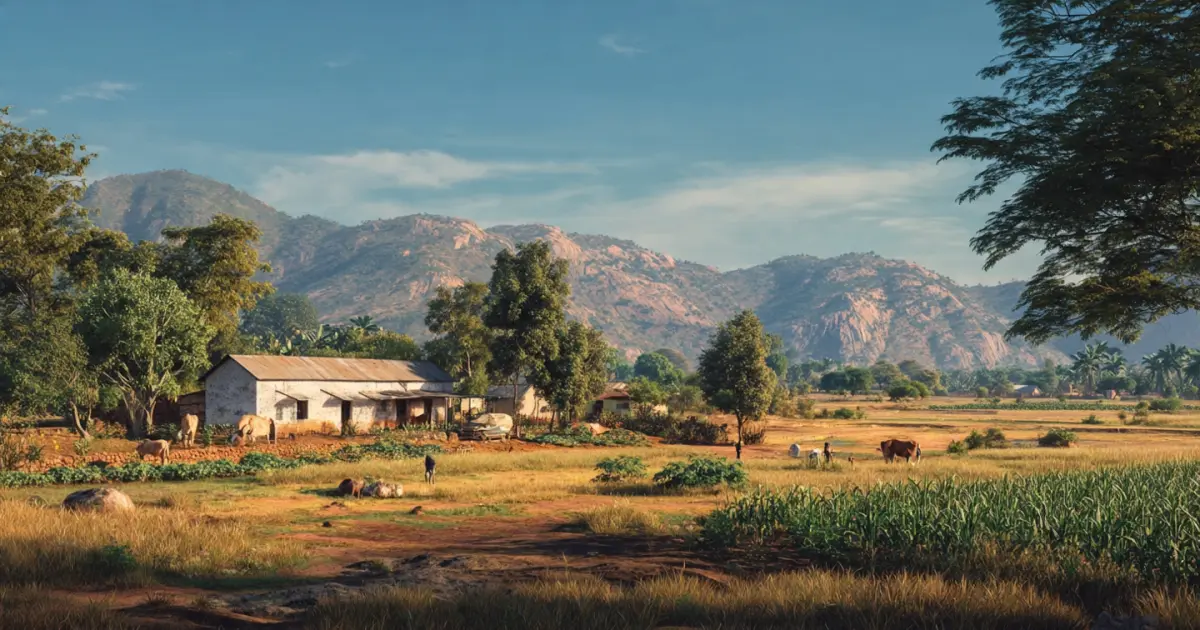
Owning property does not have to mean buying a house in Harare or Bulawayo. More and more, land outside the cities is drawing attention from people looking for space, agricultural opportunity, a family home or a long-term investment.
Rural property offers something urban property often cannot: land, space and the option to use the property for more than one purpose. It could be a family homestead, a smallholding, a farm, a weekend retreat, or part of a wider agricultural investment plan.
Propertybook’s analysis of Zimbabwe’s agricultural property market shows the range on offer. Our 2025 market guide reported farm listings running from small village plots to large-scale farms, with big differences in price depending on location, size and agricultural potential.
Rural property also comes with a different set of considerations. What rights come with the land? What can legally be done on it? What infrastructure exists around it?
Rural Property Is Not One Type Of Property
One of the first mistakes buyers make is treating all rural land as though it has the same ownership structure. Zimbabwe has several land tenure arrangements, including freehold, state land, leasehold and communal land. The Ministry responsible for lands and rural development identifies permit, leasehold and freehold arrangements among the country’s tenure systems.
Communal land matters most here. Communal land is governed under the Communal Land Act. People occupying communal land have rights to use and occupy that land. Those rights are not the same as conventional private ownership, which lets an owner freely sell and transfer.
That distinction changes how a buyer should approach a transaction. Someone may describe a piece of land as “their rural plot.” That does not mean they hold a registered title deed that can simply be transferred. The paperwork and the tenure arrangement matter as much as the land itself.
Why Rural Property Can Be Attractive
More land for your money. The obvious attraction is space. A buyer who cannot afford a large urban property may find much more land outside the major cities. Depending on location, that can open up gardening, livestock, orchards, poultry, small-scale crop production, or simply a bigger family homestead.
Propertybook’s agricultural property analysis found large variation in farm values across Zimbabwe. Our 2025 analysis placed the average listed farm price at roughly US$415,000, while also picking up much cheaper smaller plots and far more costly large-scale farms.
So rural property should never be treated as having one standard price. A smallholding near a major town can be priced very differently from agricultural land several hundred kilometres away.
Agricultural potential. For many buyers, the land itself is the investment. A rural property can generate value through crops, livestock, horticulture, poultry, agro-processing or other activities.
Location is critical. A property with fertile soils but poor water access can be less attractive than a smaller property with reliable water and good roads. Land close to established markets has an advantage over cheaper land in remote areas.
Propertybook has previously identified Mashonaland East, Marondera, Ruwa, Arcturus, Goromonzi and Beatrice among areas of interest for agricultural property, while noting the price premium on land closer to Harare.
A family home away from the city. Not every rural buyer wants to become a commercial farmer. For many Zimbabweans with strong family ties to rural areas, the goal is a permanent family home. A rural homestead can hold several generations, plus gardens, livestock and activities that would never fit on a normal urban stand.
The Ministry of National Housing and Social Amenities treats rural housing as part of the country’s wider housing programmes. That includes rural housing funds and model housing and development plans. That recognition matters, because rural housing is not just an informal extension of urban development. It needs its own approach to planning, infrastructure and services.
The Infrastructure Question
A cheap rural property becomes an costly project if basic services have to be built from scratch. Before buying, investigate:
-
Road access
-
Electricity availability
-
Borehole or other water sources
-
Mobile network coverage
-
Internet connectivity
-
Nearby schools
-
Clinics and health facilities
-
Shops and markets
-
Public transport
-
Waste and sanitation arrangements
-
Distance from major roads and towns
Access to services varies a lot between rural communities. ZIMSTAT’s 2022 Population and Housing Census shows the scale of the challenge. Nationally, households drew on a mix of piped water, boreholes, protected wells and other sources. The census also recorded big differences in sanitation and household energy.
For a buyer, that boils down to one lesson. Do not value rural land only by its size. Value the infrastructure that makes the land usable.
Water Can Make Or Break A Rural Investment
Anyone considering agricultural land should establish whether the property has reliable water, and what rights or approvals are needed for abstraction or development.
A property advertised as “having a borehole” is not the same as a property with an unlimited water supply. Check the borehole’s condition, its yield, the pump, and the supporting infrastructure.
The same applies to irrigation. Zimbabwe’s water framework includes the Water Act and the Zimbabwe National Water Authority Act. Government agricultural programmes emphasise consultation and compliance around water allocation and irrigation development. In practice, water should be investigated before the transaction closes, not after you start building.
The Biggest Issue: Know What You Are Actually Buying
This is where rural property differs most from an ordinary urban transaction. Establish the property’s tenure before paying a deposit. Is it:
-
Privately owned land?
-
Communal land?
-
State land?
-
A1 settlement land?
-
Leasehold land?
-
Land held under a permit?
-
Land with registered title?
-
Land subject to another form of occupancy or use right?
Government has stated that A1 permits are security-of-tenure documents issued to A1 farmers. The land administration framework also recognises 99-year leases and other lease arrangements. These are not interchangeable.
A buyer looking at rural agricultural land for sale should not assume the seller can transfer it the way a registered urban owner transfers a title-deeded house. The nature of the seller’s rights decides what can legally be transferred.
Be Careful With Informal Rural Land Deals
A low-priced rural plot can tempt buyers into informal arrangements. A handshake, a receipt or a locally written agreement does not give you the protection of verified tenure and a legally recognised transaction.
The disposal of certain rural land is subject to specific legal requirements, including provisions on Government’s rights over rural land. There are also procedures around Certificates of No Present Interest for certain rural land transactions.
This is why buyers should resist pressure to “pay now before someone else takes it.” Instead, check for yourself:
-
Who legally controls the land?
-
What tenure document exists?
-
Who has authority to sell or transfer the interest?
-
Are the boundaries clearly established?
-
Is the land affected by any government acquisition or other restrictions?
-
Is there an existing dispute?
-
What approvals are required for your intended use?
The Rural District Council Matters
Rural property does not sit outside the planning system. Rural District Councils are statutory local planning authorities. They approve development activities in their districts, coordinate local consultations and provide oversight on land use, water access and community welfare.
So if you plan to build a house, put up commercial agricultural infrastructure, subdivide land or introduce another development, speak to the relevant local authority before you proceed. The exact requirements depend on the location and the proposed development.
Building A Rural Home Is Not Simply About Putting Up Four Walls
One attraction of rural property is the freedom to build a home that is bigger or more customised than an urban house. Even so, the build still has to meet planning, environmental and infrastructure rules.
The Ministry of National Housing and Social Amenities sets and monitors national housing and social amenities standards. It also guides where settlements go and how they are classified, and runs rural and urban model housing plans.
Environmental rules can also apply, especially where development touches sensitive ecosystems, water infrastructure, irrigation or quarrying. Zimbabwe’s Environmental Management Agency framework requires Environmental Impact Assessments for prescribed projects. Irrigation development and water infrastructure are among the activities that can fall under those requirements.
The message is straightforward. Check the development requirements before buying land for a specific project.
Rural Property Near A Growing Town Is A Different Proposition
Not all rural property is equally remote. Some land sits on the edge of expanding towns and cities, which changes the investment case. Areas around Harare and other major centres attract buyers who want larger plots but still want reasonable access to urban markets.
Propertybook’s agricultural market analysis shows this price-location relationship clearly. Our data showed a significant gap between agricultural property in Mashonaland East and properties listed within Harare itself.
For investors, proximity can matter almost as much as acreage. Take a property that is rural today but sits near expanding infrastructure, transport routes, commercial centres or growing settlements. Its long-term outlook can be very different from an equally sized property further out.
But do not buy purely on the hope that “the city will eventually reach here.” Growth needs evidence behind it. Look for road development, approved planning frameworks, nearby commercial activity and population growth.
What About The Diaspora Buyer?
Rural property appeals strongly to Zimbabweans living abroad. A diaspora buyer may want to build a retirement home, start an agricultural project, or secure land for parents and extended family. Distance makes due diligence more important, not less.
A buyer living in South Africa, the United Kingdom, Australia or elsewhere should not rely on photographs or a relative’s description. Before sending money, arrange independent checking of:
-
The location of the property
-
Land boundaries
-
Seller identity
-
Tenure paperwork
-
Development restrictions
-
Existing occupants
-
Road access
-
Water availability
-
Electricity
-
Local authority rules
-
Any disputes or competing claims
Where possible, make professional legal and surveying advice part of the transaction. For a diaspora buyer, independent checking is usually worth far more than the few dollars saved on professional fees.
Rural Property As An Investment: Look Beyond Appreciation
Urban property investors tend to focus on capital appreciation and rental income. Rural property has a wider range of uses. Depending on tenure and allowed use, value can come from:
-
Crop production
-
Livestock
-
Horticulture
-
Poultry
-
Agro-processing
-
Farm housing
-
Tourism
-
A family residence
-
Long-term land holding
Not every property can legally or practically support every activity. A property with poor road access will struggle to support commercial farming, because moving inputs and produce becomes costly. A property without reliable water has limited agricultural potential even if the soil is excellent.
So the investment case has to rest on the property’s actual productive potential, not acreage alone.
The Rural Property Checklist
Before committing to a purchase, ask five broad questions.
-
Is the tenure secure? Understand exactly what document or legal arrangement gives the seller their rights.
-
Can the interest legally be transferred? Do not assume that because someone occupies land, they have the right to sell it.
-
Can I use the property for my intended purpose? A property suitable for a homestead may not be suitable for subdivision or commercial development.
-
What will infrastructure cost me? Price out roads, water, electricity, fencing, sanitation, buildings and agricultural infrastructure.
-
What happens if I need to sell? A property is only an investment if its ownership and transfer arrangements are clear enough to allow a future sale.
The Opportunity Beyond The City
Zimbabwe’s property conversation has always leaned heavily on urban housing. Rural property is another important part of the picture. For some buyers it is about owning a family home. For others it is an agricultural opportunity. For investors it can mean larger parcels of land and several possible income streams.
The opportunity is real. So is the need for caution. Government’s land administration framework, housing programmes and rural development initiatives all point to the same thing: proper land administration, planning and suitable development matter.
For buyers, the golden rule is simple. Do not buy rural property because it is cheap. Buy it because you understand the land, the rights attached to it, the infrastructure around it, and what you can legally and practically do with it.
In Zimbabwe’s rural property market, the best investment is not the biggest piece of land. It is the piece of land whose potential you can actually unlock.
Sources And References
-
Propertybook. “Agricultural Investment In Zimbabwe: A Complete Guide.” Analysis of agricultural land prices, locations and market openings. www.propertybook.co.zw. Accessed August 2026.
-
Propertybook. “How To Rent A Farm In Zimbabwe: A Complete Guide.” Additional analysis of farm locations and agricultural property. www.propertybook.co.zw. Accessed August 2026.
-
Ministry of Lands and Rural Development. Land administration, tenure systems, A1 permits, leases and rural land rules. www.agric.gov.zw. Accessed August 2026.
-
Ministry of National Housing and Social Amenities. Rural housing programmes, standards and model housing plans. www.nationalhousing.gov.zw. Accessed August 2026.
-
ZIMSTAT and UNFPA. 2022 Population and Housing Census, Living Conditions Thematic Report. National data on housing adequacy, water, sanitation and electricity. www.zimstat.co.zw. Accessed August 2026.
-
Parliament of Zimbabwe. National Assembly Hansard. Background on Zimbabwe’s land information systems and forms of land and property rights. www.parlzim.gov.zw. Accessed August 2026.